Elephant Wild: A Joyful Display Font for Small Business Branding
Last Tuesday, I was helping a local candle maker update her jar labels—simple white kraft paper, black ink, and a hand-drawn logo she’d loved for years. But something felt off. The handwritten script looked charming on its own, yet lost impact when scaled down or printed in bulk. Customers kept mistaking her bestseller (“Honey & Sage”) for “Honey & Salt.” That’s when we swapped in Elephant Wild. Within minutes, the label felt brighter, friendlier, and unmistakably hers—no redesign needed.
A Font That Feels Like a Warm Welcome
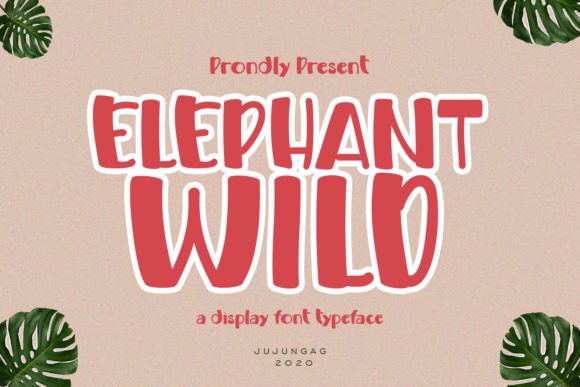
Elephant Wild is a display font with personality: rounded letterforms, gentle curves, and just enough quirk to feel handmade—without sacrificing clarity. It’s not a script, not a serif, not a sterile sans serif. It’s a cheerful, confident middle ground: think friendly neighborhood bakery chalkboard meets modern apothecary packaging. Letters have soft weight contrast and open counters (the enclosed spaces inside letters like ‘a’, ‘e’, or ‘o’), which helps them stay legible even at smaller sizes—especially important for product labels, stickers, or Instagram story text.
What makes it work so well for small businesses? It carries warmth without looking childish, and playfulness without seeming unprofessional. Unlike some display fonts that shout or distract, Elephant Wild invites attention—then holds it with sincerity. It’s the kind of typeface that makes customers pause mid-scroll, tilt their head slightly, and smile. That micro-moment matters—especially when you’re competing for attention in a crowded online shop or a busy farmers’ market stall.
Where Elephant Wild Shines in Real Business Materials
We tested Elephant Wild across several common small business touchpoints—and each time, it added polish without overcomplicating things:
- Packaging & Labels: On a lavender-scented soy candle jar, “Lavender Fields” in Elephant Wild stood out crisply against matte black ink—even on curved glass. Its generous x-height (the height of lowercase letters like ‘x’) meant no squinting to read the scent name at arm’s length.
- Menus & Print Collateral: A café owner used it for section headers (“Pastries,” “Specialty Drinks,” “Seasonal Favorites”) alongside a clean sans serif body font. The contrast gave visual rhythm without overwhelming the menu’s readability.
- Social Graphics: For Instagram carousel posts promoting holiday gift sets, Elephant Wild added instant charm to short headlines like “Hand-Poured • Small Batch • Made With Care.” It held up beautifully on mobile thumbnails—no pixelation, no awkward spacing.
- Thank-You Cards & Stickers: One ceramicist printed “Thanks for supporting small!” in Elephant Wild on kraft thank-you cards. The font’s slight bounce made the message feel personal—not templated.
It’s worth noting: Elephant Wild is designed as a display font, not body text. That means it shines brightest in headlines, logos, packaging titles, social media banners, and decorative accents—not long paragraphs or fine print. Use it where you want emotion, memorability, and brand voice to lead.
Pairing It Thoughtfully (No Design Degree Required)
Great typography isn’t about one font—it’s about harmony. Elephant Wild pairs beautifully with typefaces that ground its energy. Here’s what worked consistently:
- A clean sans serif (like Inter, Montserrat, or Open Sans) for body copy, pricing, or ingredient lists—gives balance and professionalism.
- A subtle serif (like Lora or Merriweather) for elegant contrast—ideal for beauty brands or artisan food labels aiming for quiet sophistication.
- A delicate script or handwritten font (used sparingly!) for signatures or taglines—adds layered personality without clutter.
The key is contrast: Elephant Wild brings character; its partner brings structure. Think of it like choosing a bold scarf to go with a simple coat—it doesn’t replace the coat, it completes it.
Before You Install: Practical Checks for Business Use
Before dropping Elephant Wild into your next project, take two quick checks:
- Licensing: Confirm it’s a commercial font licensed for your use case—especially if you’re selling physical products (candle labels, soap tags, boutique packaging) or offering branded templates to clients. Most reputable display fonts include clear commercial licensing, but always double-check the license file.
- File & Feature Support: Look for OTF or TTF files (widely compatible), plus extras like stylistic alternates or ligatures—if your design tool supports them, they can add subtle polish. Also check multilingual support if you serve diverse communities or plan international shipping.
And one gentle reminder: test early and often. Print a label mockup. Zoom in on your phone screen. Ask a friend to read it from across the room. Elephant Wild is joyful—but joy shouldn’t come at the cost of clarity.
When Your Brand Needs a Little More Heart
Typography is one of the most underrated tools in a small business owner’s toolkit. It doesn’t cost extra to upgrade your font—but it *does* change how people feel when they see your name, your product, your message. Elephant Wild won’t fix inconsistent branding or unclear messaging on its own. But when used intentionally—as part of a thoughtful, consistent system—it helps your business feel more human, more memorable, and quietly confident.
Whether you're refreshing a single product label or building your first full brand identity, Elephant Wild offers something rare: delight with discipline. It’s playful, yes—but never careless. Friendly, yes—but never forgettable. And in a world full of sameness, that kind of distinction isn’t just nice to have. It’s how customers find you, remember you, and choose you again.